

BUCRA: Building Unity for Climate Resilient Agriculture
Together for Sustainable Farming
Introduction
The Impact Cluster BUCRA (Building Unity for Climate Resilient Agriculture) aims to enhance knowledge, expertise, and technology for farms in Egypt, with a specific focus on the village of Qahbunah. Launched in September 2024 and running until September 2027, the project is a collaboration between the NABC and various Dutch and Egyptian partners.
Following extensive research and multiple on-ground visits, a baseline study has been developed to better understand the local agricultural context. The consortium has engaged with key stakeholders—including GIZ, the Ministry of Water and Irrigation, and the World Food Programme—to align efforts and explore opportunities for collaboration.
BUCRA, in Arabic, بكرة (pronounced as Bucra), means tomorrow, with an implication of “the future”. With this in mind, the project comes into action to bring together Dutch and Egyptian partners to ensure Egypt’s future in the agriculture sector is improved and sustained, helping the farmers and improving quality of life in in the Qahbunah village. If you would like to learn more or feel this may benefit you; reach out and follow our Facebook page.
Project Goals

Improve agricultural resilience through innovative techniques
Enhance water management and irrigation efficiency

Develop sustainable value chains and market access for farmers

Introduce digital solutions to support agricultural decision-making

Developing a lighthouse farm that can be replicated into other areas in Egypt

Introducing the concept of land use consolidation
Our Work Packages
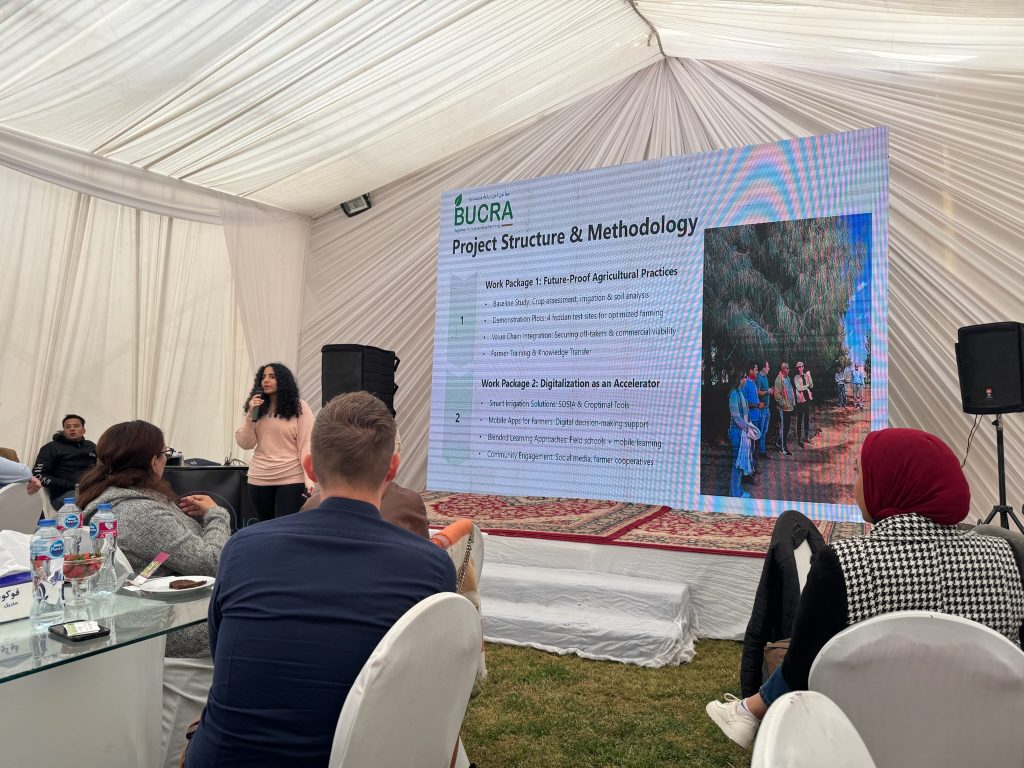
Work Package 1- Future Proof Agricultural Practices
- Baseline Study: Crop assessment, irrigation and soil analysis
- Demonstration Plots: 4 feddan test sites for optimised farming
- Value Chain Integration: Securing off-takers and commercial viability
- Farmer Training and Knowledge Transfer
Work Package 2- Digitalisation as an Accelerator
- Smart Irrigation Solutions: SOSIA & Croptimal tools
- Mobile Apps for Farmers : Digital decision-making support
- Blended Learning Approaches: Field schools+ mobile learning
- Community Engagement: Social media, farmer cooperatives
If you want to learn more, reach out to us and follow our Facebook page for on-the-ground updates!
Updates
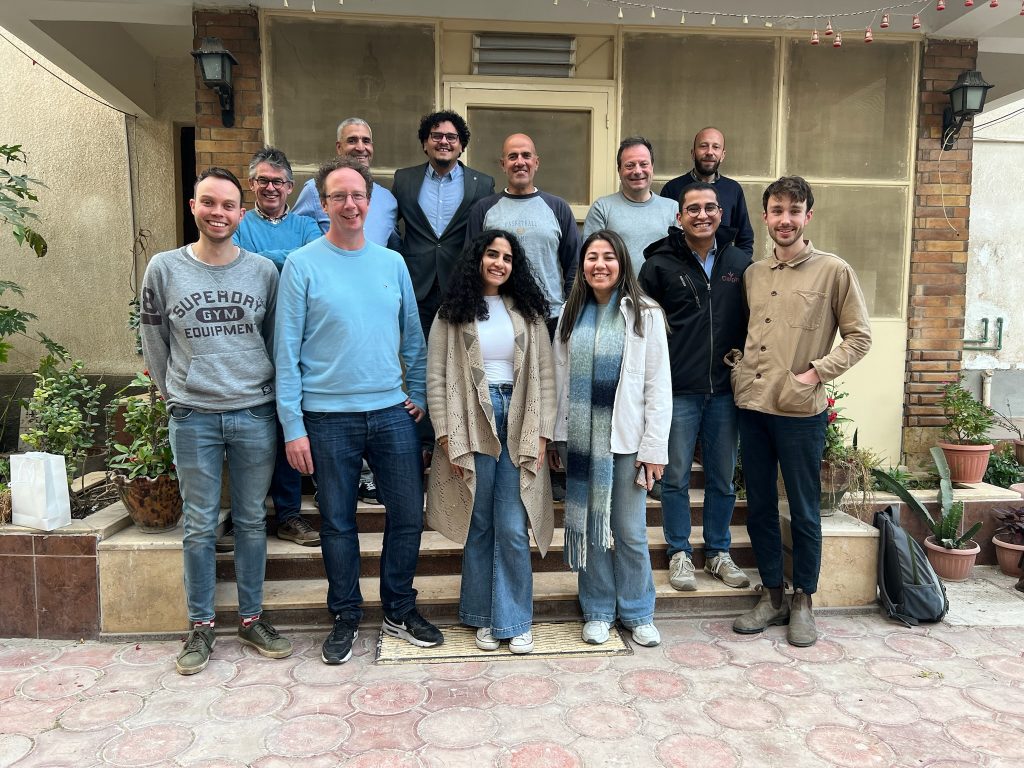
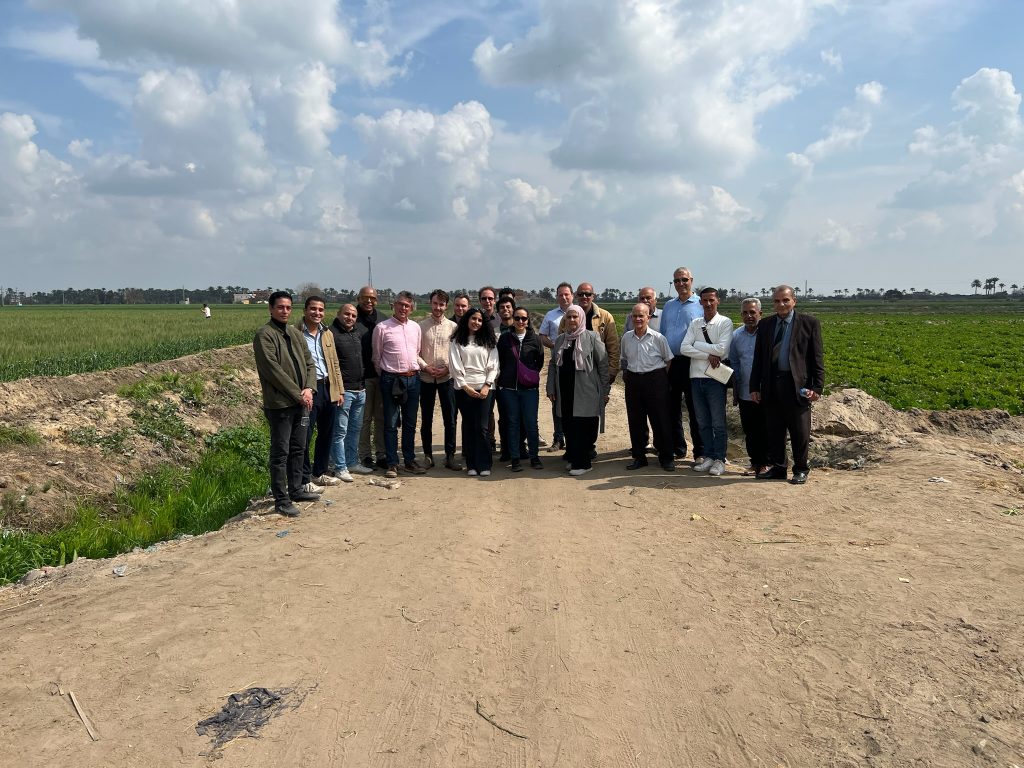
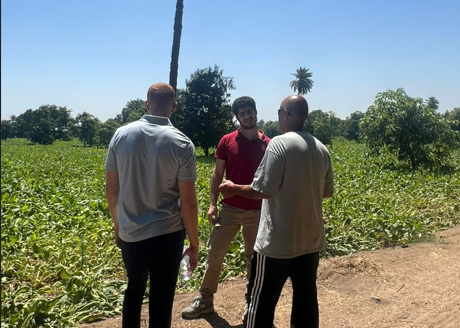
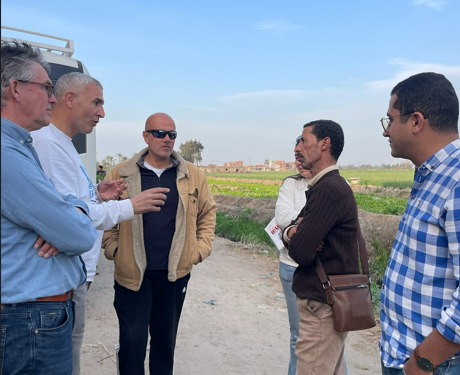
BUCRA partners had their first meeting of 2025 in February, followed by another trip in April. Discussion and proposals were made amongst the partners as well as field visits to the farms to continue plans for the multi-year project!
Currently, the project is in the process of developing an agricultural development plan for the region. Additionally, a demonstration plot is being designed, where conventional farming techniques will be improved and new practices and crop varieties introduced to enhance climate resilience and sustainability.
The BUCRA Inception Report provides a comprehensive baseline assessment of agricultural conditions in the Qahbunah region of Egypt, where the project’s 95-feddan pilot farm is located. The study evaluates soil and water quality, crop yields, irrigation and drainage systems, mechanization, and the socio-economic realities of farmers. Findings highlight challenges such as soil salinity, water scarcity, outdated infrastructure, high input costs, land fragmentation, and limited access to modern practices. Despite these barriers, farmers show strong willingness to adopt new techniques. This report lays the foundation for targeted interventions to build climate-resilient, sustainable farming across the Nile Delta.
Our digital learning platform, developed by SkillEd, has reached
- 1,168 unique visitors
- 3,143 page views
- with ~150 people actively working through the training modules.
Alongside this, SkillEd has launched an App; a new tool for farmers facing climate change is now available on Google Play! This app offers practical, field-tested training for farmers in the Nile Delta and similar areas facing soil salinity, water scarcity, and unpredictable growing seasons.
Read, watch, or listen.
Content is available in written, video, and audio format, in both Arabic and English.
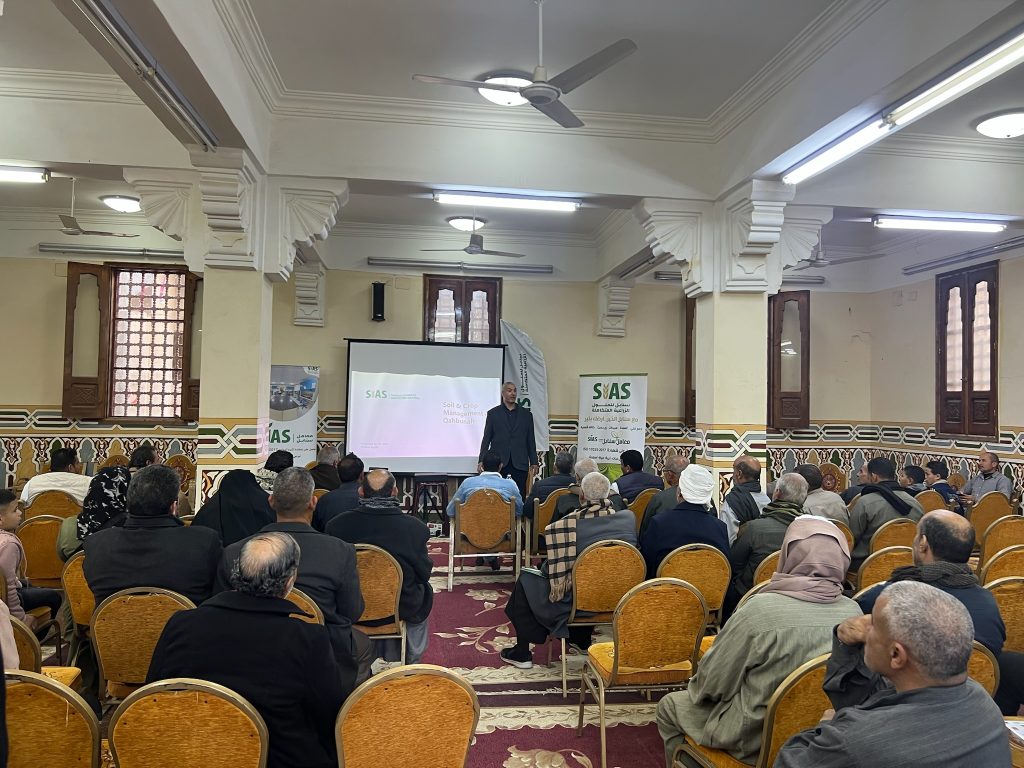
- 9 Farmer Field School sessions
- Trained 184–200 farmers on the ground
- Attendance climbing to a peak of 50 participants
- Signed MoU between SkillEd and CARE Egypt for the dissemination of the trainings
- Expanding engagement from GIZ Egypt, World Food Programme and Egyptian Ministry of Agriculture and Land Reclamation to bring BUCRA trainings to new locations.
The agricultural development plan set the technical foundation the cluster keeps building on. The plan addresses key farming challenges in the Nile Delta, including water scarcity, soil salinity, and low crop yields, through sustainable practices demonstrated across three plots on the Buzoor farm. It combines improved land management with a practical, cost-effective water management design, alongside a clear path for scaling successful practices across the wider region.
Key elements:
- Sustainable farming practices: crop rotation, soil health improvement through compost and manure, mulching for moisture retention, and improved pest and weed management
- Water efficiency: replacing inefficient furrow irrigation with drip irrigation to address unreliable Nile water supply, high groundwater salinity, and poor drainage water quality
- Water management design: two design options were assessed, a modular dual storage system, and a lower-cost drip irrigation system using existing water sources. The lower-cost option was selected as the financially and technically feasible solution, and was further engineered by local partner Sanable, with full drawings and bills of quantities included as annexes
- Salinity control: a controlled drainage system supports water reuse and salinity management across both design options
- Maintenance plan: includes flushing to manage salinity, canal cleaning, sediment trap upkeep, and biannual inspections
- Monitoring indicators: crop yield, soil organic matter, electrical conductivity, irrigation efficiency, and economic return
- Scaling across the Nile Delta: water storage on marginal land, robust canal and pipe infrastructure for future expansion, and blending of Nile, groundwater, and treated drainage water to manage salinity (reverse osmosis noted as impractical for small farms)
- Capacity building: tailored training, digital tools, and trainer-of-trainers programmes to bridge knowledge gaps and support long-term sustainability
Partners

Contact Us
Mattijs Renden
- Sahel Region, Côte d'Ivoire, Tunisia, Ethiopia, Kenya, Ghana
- mattijs.renden@nabc.nl